
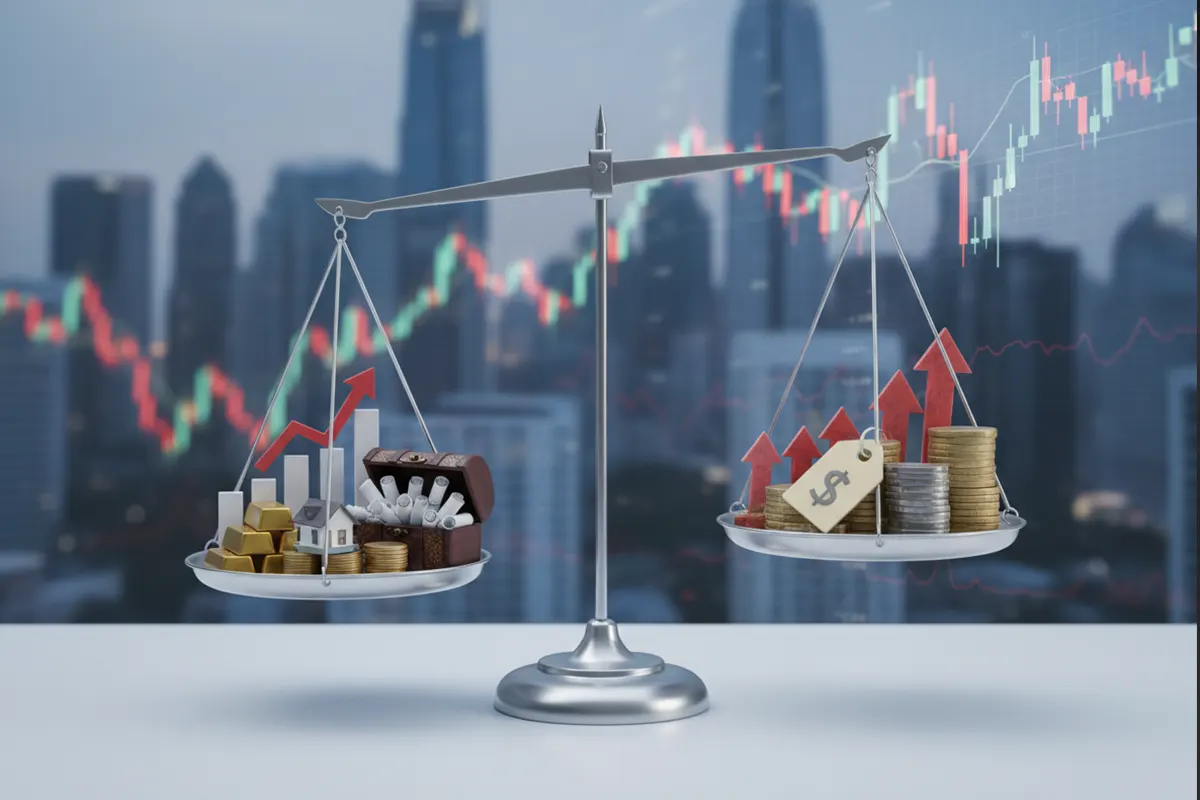
Inflation is one of the most influential forces shaping long-term investment outcomes. While modest inflation is a normal part of a healthy economy, sustained or unexpected inflation can significantly erode purchasing power and alter the real value of investment returns. For long-term investors, understanding how inflation affects different asset classes and incorporating inflation-aware strategies is essential to preserving and growing wealth over time.
This article explores how inflation impacts long-term investment strategies and outlines practical approaches investors can use to mitigate its effects.
Understanding Inflation and Purchasing Power
Inflation refers to the gradual increase in the general price level of goods and services over time. As inflation rises, the purchasing power of money declines, meaning the same amount of currency buys fewer goods or services in the future.
For long-term investors, this erosion of purchasing power is a critical risk. An investment portfolio may show positive nominal returns, yet still deliver negative real returns once inflation is taken into account. For example, an annual portfolio return of 4% may appear acceptable, but if inflation is running at 5%, the investor is effectively losing purchasing power.
This makes inflation not just a short-term economic concern, but a central factor in long-term financial planning and investment strategy design.
Inflation’s Effect on Traditional Asset Classes
Equities (Stocks)
Equities have historically been one of the more effective long-term hedges against inflation. Companies can often pass rising costs on to consumers through higher prices, which can support revenue growth over time. However, inflation can also compress profit margins, increase borrowing costs, and reduce consumer demand, particularly during periods of high or volatile inflation.
Not all equities respond to inflation in the same way. Companies with strong pricing power, low debt, and essential products or services tend to perform better in inflationary environments than those operating with thin margins or high leverage.
Fixed Income (Bonds)
Inflation poses a significant challenge for fixed-income investors. Traditional bonds provide fixed interest payments, which lose real value as inflation rises. Additionally, rising inflation often leads to higher interest rates, which can cause bond prices to fall.
Long-term bonds are particularly vulnerable, as their fixed payments are locked in for extended periods. As a result, inflation can materially reduce both income and capital value for bond-heavy portfolios unless specific inflation-protected instruments are used.
Real Assets as Inflation Hedges
Real Estate
Real estate is commonly viewed as an effective inflation hedge. Property values and rental income often rise alongside inflation, helping to preserve real returns. Additionally, fixed-rate mortgages can become advantageous during inflationary periods, as loan repayments are made with devalued currency over time.
However, real estate investments are not without risks. Rising interest rates, regulatory changes, and local market conditions can all impact performance. Diversification within real estate and careful market selection remain critical.Cash and Cash Equivalents
Cash is one of the most inflation-sensitive assets. While it provides liquidity and short-term stability, cash typically delivers returns well below inflation over long periods. Holding excessive cash during inflationary periods can lead to a substantial loss of purchasing power, making it unsuitable as a long-term wealth preservation strategy.
Commodities and Natural Resources
Commodities such as energy, metals, and agricultural products often perform well during periods of rising inflation, as their prices are directly linked to the cost of goods and production inputs. Exposure to commodities or natural resource equities can help offset inflation-driven losses in other parts of a portfolio.
That said, commodities tend to be volatile and cyclical, making them more suitable as a complementary allocation rather than a core long-term holding.
Inflation-Protected and Alternative Investments
Inflation-linked bonds, such as inflation-protected government securities, are designed to adjust their principal and interest payments in line with inflation. These instruments can provide a direct hedge against rising prices, particularly within conservative or income-focused portfolios.
Alternative investments, including infrastructure, private equity, and certain hedge fund strategies, may also offer inflation resilience due to contractual inflation-linked revenues or exposure to real economic activity. While these investments can enhance diversification, they often involve higher complexity, reduced liquidity, and greater risk.
Strategic Portfolio Adjustments for Inflation Resilience
Long-term investors can improve inflation resilience through several strategic principles:
- Diversification across asset classes to reduce reliance on any single inflation outcome
- Focus on real returns, not just nominal performance
- Regular portfolio reviews and rebalancing to reflect changing inflation and interest rate conditions
- Emphasis on assets with pricing power or inflation-linked cash flows
Importantly, attempting to time inflation cycles is notoriously difficult. Instead, successful long-term strategies are typically built to perform across a range of inflation scenarios rather than relying on short-term forecasts.
Conclusion: Inflation as a Core Long-Term Investment Consideration
Inflation is an unavoidable reality for long-term investors, and its impact compounds over time. Ignoring inflation can undermine even well-constructed investment plans, while proactively addressing it can help preserve purchasing power and support sustainable growth.
By understanding how inflation affects different asset classes and incorporating inflation-aware strategies, investors can build portfolios that are better positioned to withstand economic shifts. Ultimately, long-term investment success depends not only on generating returns, but on ensuring those returns maintain real value in an ever-changing economic environment.